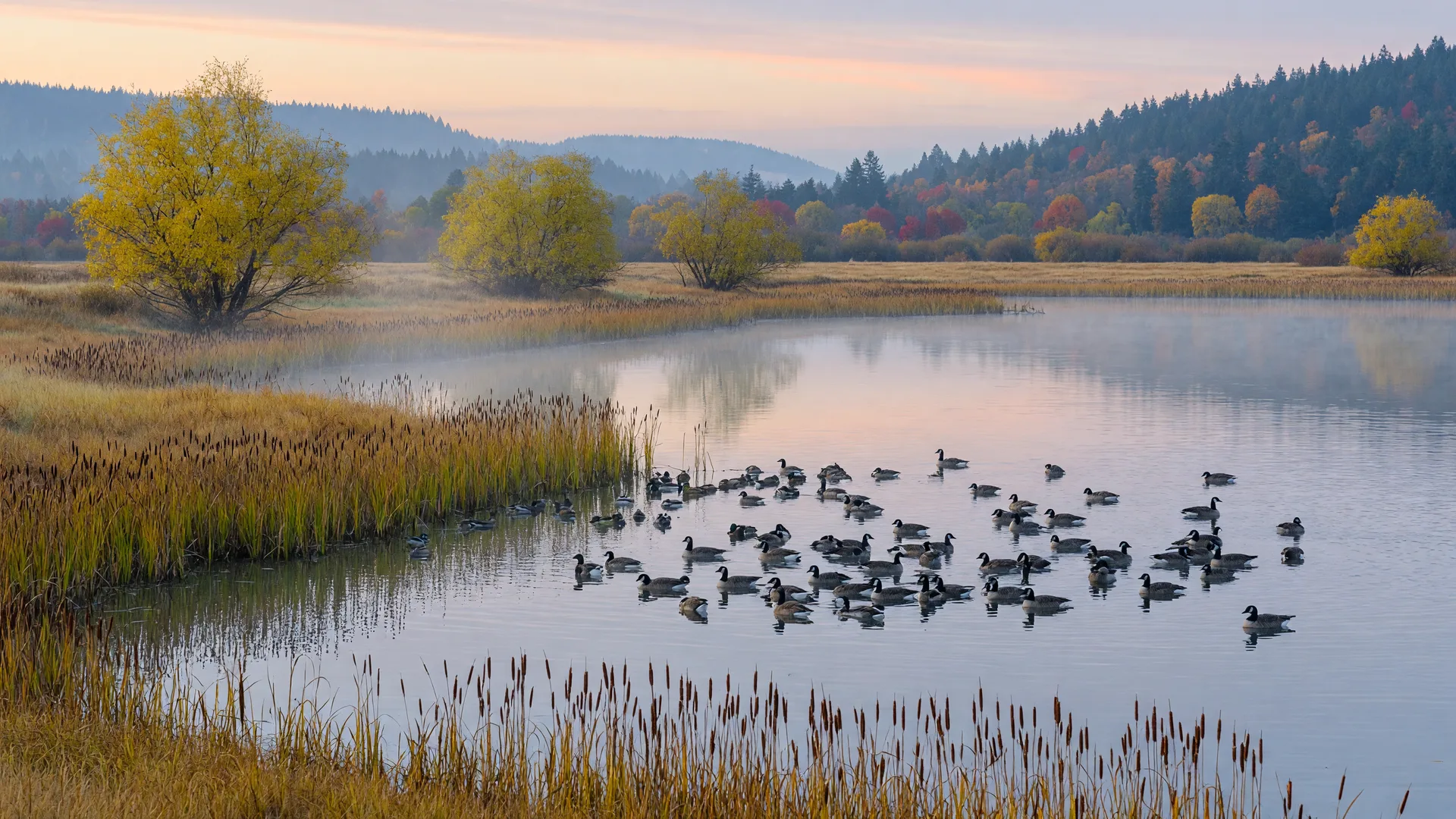
Fall bird migration at the Tualatin River Wildlife Refuge.
Autumn turns the refuge into one of the Portland area's best wildlife stops: Arctic-nesting waterfowl arrive, bald eagles return, and shorebirds work the mudflats. Here is what to look for this fall.
The Tualatin River National Wildlife Refuge sits on the Pacific Flyway, the great migration corridor that funnels birds between Alaska, Canada, and wintering grounds to the south. As September rains return and temperatures cool, Arctic-nesting waterfowl begin arriving at the refuge's wetlands, and bald eagles become regular visitors overhead. For a refuge with roughly 200 bird species and more than 70 other animal species on record, fall is one of the richest seasons to visit.
It is also close enough to be an everyday escape: the refuge entrance sits at 19255 SW Pacific Hwy in Sherwood, about ten minutes south of 22379 SW 107th Ave. A previous guide here covered the refuge as a year-round destination; this fall checklist focuses on what migration season brings.
What to look for
The fall cast of characters.
Waterfowl on the ponds
Ducks, geese, and more
As the rains return, Arctic-nesting ducks and geese settle in on the refuge's open water. Early mornings are best, when flocks rest and feed on the calm ponds before dispersing for the day.
Shorebirds on the mudflats
Snipe, yellowlegs, dowitchers, sandpipers
Fall shorebird migration brings Long-billed Dowitchers, Greater and Lesser Yellowlegs, Wilson's Snipe, Pectoral Sandpipers, Wilson's Phalaropes, and Least Sandpipers to the exposed mudflats. A spotting scope makes the identification much easier.
Bald eagles
Regular visitors in fall
Bald eagles become regular visitors as the season turns, drawn by the concentration of waterfowl. Watch the tall cottonwoods along the river for perching birds, especially mid-morning.
Mammals along the trails
Deer, beavers, coyotes
Beyond birds, fall visitors may spot black-tailed deer near the wetlands, beavers working the channels at dusk, and the occasional coyote crossing the fields. Move quietly and let the wildlife set the pace.
Plan your visit
Hours, trails, and what changes in October.
Trails and the parking lot are open daily from dawn to dusk, and the Visitor Center runs Tuesday through Sunday, 10 AM to 4 PM (closed Mondays). One important fall detail: the refuge's seasonal trail closes October 1 through April 30 each year to protect wintering wildlife habitat. The year-round trail, a roughly two-mile out-and-back route ending at a wetland overlook, stays open for fall viewing, so check refuge signage and the U.S. Fish and Wildlife Service refuge page before you head out.
A few field notes: bring binoculars even if you are not a birder, because the ponds reward them; go early, around sunrise, for the best activity and light; and dress for rain, which is both likely and good for the birds. The refuge is free to visit, and the pace of the trails makes it as much a walk as a birding trip, which is exactly why it works for families and first-timers.
For more fall outdoors near home, the local parks and greenway guide covers Ibach Park, Browns Ferry, and the river trail, all easy to pair with a refuge morning.
Make Your Move
A home within minutes of all this nature.
The refuge, Ibach Park, and the river greenway are all close to 22379 SW 107th Ave. Paul Knighton of MORE Realty can show you the neighborhood for yourself.
Schedule a Tour